

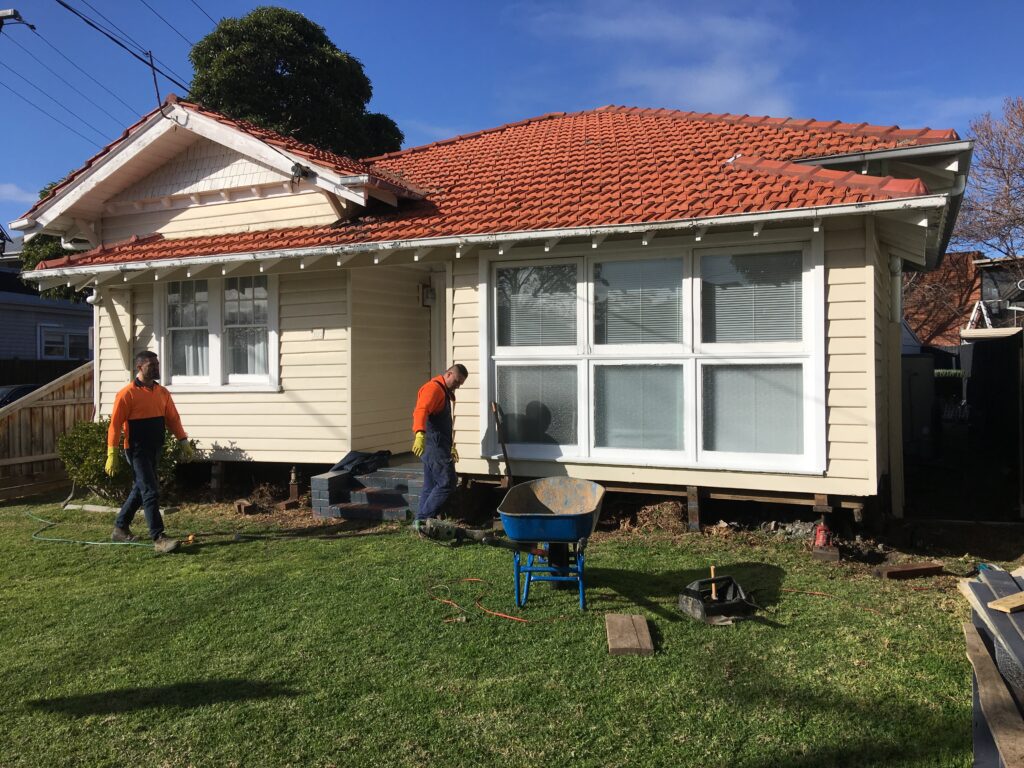
Cracked walls, floors that slope, and doors that no longer close properly are all signs that a home has moved. What is less obvious is which repair method fixes it.
Reblocking and underpinning are both foundation repairs, but they apply to different construction types and solve different problems. Choosing the wrong one means paying for work that does not address the cause.
This guide explains what each method involves, what each costs in Melbourne in 2026, and how to tell which one your home needs.
What is reblocking?
Reblocking in Melbourne is the process of replacing old or deteriorated stumps beneath a home with new supports, typically concrete or steel, and re-levelling the structure as part of the work.
It is most commonly performed on older homes originally built on timber stumps, which covers a large share of Melbourne’s pre-1970s housing stock.
Reblocking is used to:
- Restore structural stability
- Correct uneven and sloping floors
- Replace deteriorated timber stumps
- Prevent further movement beneath the home
- Extend the serviceable life of the property
Learn more about our reblocking in Melbourne services.
What is underpinning?
Underpinning strengthens and stabilises foundations that have moved, settled, or become compromised. Rather than replacing supports, it extends the existing foundation down to more stable soil so the load transfers to ground that will not shift.
Unlike reblocking, underpinning is usually performed on homes built on concrete footings or masonry foundations.
Underpinning is used to:
- Stabilise foundations that are actively moving
- Transfer structural loads to more stable soil
- Strengthen existing footings
- Repair foundation settlement
- Stop cracking that continues to widen
Underpinning generally requires engineering assessment and is used where significant structural movement has already occurred. Learn more about our underpinning Melbourne services.
Where restumping fits in
Restumping is often confused with reblocking, and the two are not interchangeable.
Restumping replaces deteriorated stumps and leaves the house where it sits. It is the right choice when the supports have aged but the structure is still level.
Reblocking in Melbourne lifts the house, re-levels it, and installs new stumps at the corrected height. It is necessary once the structure has already moved.
The distinction matters commercially. Restumping a house that has already dropped replaces the supports and locks in the movement, so the sloping floors and sticking doors remain. For a full breakdown of the price difference, see our restumping cost guide or our restumping Melbourne service page.
Reblocking vs underpinning: key differences
| Reblocking | Underpinning |
|---|---|
| Replaces old stumps beneath the home | Strengthens existing foundations |
| Common in homes built on timber stumps | Common in homes built on concrete footings |
| Corrects uneven floors and failed stumps | Corrects foundation settlement and movement |
| Uses concrete or steel stumps | Uses engineered piers or screw piles |
| Supports the structure from beneath the floor | Stabilises the foundation itself |
| Rarely requires engineering sign-off | Usually requires engineering assessment |
What each one costs in Melbourne
Reblocking starts from around $18,000 and typically runs between $18,000 and $40,000+, or roughly $300 to $500 per stump including the lift and re-level. Full pricing is broken down by house size in our reblocking cost Melbourne guide.
Underpinning generally costs more, typically $1,500 to $3,000 per pier, with most jobs landing between $20,000 and $50,000+ depending on the number of piers and depth required. See our breakdown of underpinning cost per pier.
Underpinning carries the higher price because it typically involves structural engineering, soil testing, permits, excavation to depth, and engineered pier systems. Reblocking is a more contained scope of work.
These are indicative ranges for Melbourne metro. The number of piers or stumps, soil conditions and site access determine the final figure, and all three need to be assessed on site.
When does a home need reblocking?
Your home may need reblocking if you notice:
- Uneven or sloping floors
- Timber stumps that are rotted, cracked or sinking
- Floors that bounce or squeak excessively
- Cracking caused by failing supports
- Doors and windows that stick
- Visible movement in the subfloor
Most older Melbourne homes on timber stumps reach this point eventually. Our guide on the signs a house needs restumping covers what to look for in more detail.
When does a home need underpinning?
Underpinning may be required if you notice:
- Large or stepped cracks in brick walls
- Foundations visibly sinking or settling
- External walls leaning out of plumb
- Cracks that continue to widen over months
- Doors and windows becoming progressively misaligned
- Movement concentrated at one corner or along one wall
Widening cracks are the key signal. Cracking that stabilises is often historic movement. Cracking that keeps opening means the foundation is still moving. Our guide on the signs your home needs underpinning explains how to assess this, and what cracks in walls and uneven floors indicate covers how to read the symptoms.
Can a home need both?
Yes, and it is more common than most homeowners expect.
Extended and renovated properties frequently sit on two different foundation systems. An original timber-stumped section with a later addition on concrete footings can need reblocking at the front and underpinning at the rear.
Whether both are required depends on the age of the property, the foundation types present, the extent of movement, soil conditions, and the state of the existing stumps.
Which solution is right for your home?
The answer comes down to four things: how the home was originally built, the condition of the existing foundations, the type of movement occurring, and the soil beneath the property.
Melbourne’s reactive clay belt runs through much of the inner north and east, and reactive soil expands and contracts seasonally. That seasonal movement is behind a large share of foundation problems in these suburbs, and understanding what causes house movement is what determines whether a repair holds or has to be redone.
A contractor who cannot explain why your home moved is treating the symptom. The cause determines the method.
Why choose First Choice Reblocking
We help Melbourne homeowners identify the cause of foundation movement and repair it properly, rather than deferring the problem.
- Reblocking Melbourne
- Underpinning Melbourne
- Restumping Melbourne
- Foundation inspections and structural assessment
- Free on-site assessments across Melbourne metro
Get a fixed price for your home
Every home moves differently. A free on-site inspection identifies the cause of the movement and gives you a fixed-price quote with the full scope in writing, so you know exactly what is included before you commit.
Licensed and insured. Servicing Melbourne metro.
