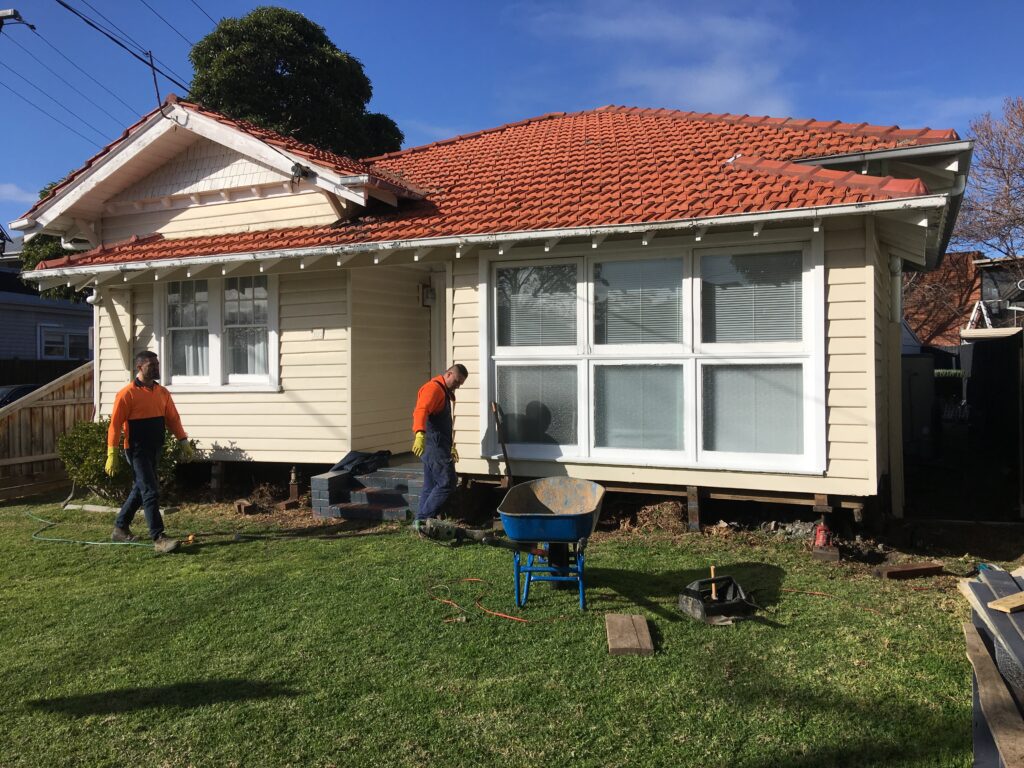

Reblocking is intended to provide a long-term foundation solution by replacing deteriorated or failing house stumps with new supports and restoring the stability of the home. However, there is no single lifespan that applies to every reblocked house. How long the work lasts depends on the type of replacement stumps, soil conditions, drainage, moisture beneath the house, installation quality and ongoing foundation movement.
Modern concrete and steel stumps are generally chosen because they offer greater resistance to deterioration than traditional timber supports. Timber durability can vary substantially depending on the species and exposure conditions, while concrete and galvanised steel eliminate the timber rot issue that affects many older Melbourne homes. The suitability of any stump system still depends on the property and foundation conditions, which is why the correct support system and installation are important. Agriculture Victoria’s timber durability guidance, for example, shows that in-ground timber life expectancy varies considerably according to durability classification.
What Affects How Long Reblocking Lasts?
The condition of the ground beneath the house can be just as important as the stump material itself. Melbourne properties can be affected by changing soil moisture, reactive clay, drainage problems, erosion and tree roots, all of which can contribute to foundation movement over time. Victoria’s Building and Plumbing Commission specifically identifies changing soil moisture, soil settlement, erosion and tree roots as potential causes of footing movement.
This is why professional [reblocking in Melbourne] should involve more than simply removing old stumps and putting new ones in their place. The condition of the existing foundation, levels, subfloor and surrounding site should be assessed so the appropriate solution can be determined. If you’re considering the work, our [Melbourne reblocking cost guide] also explains how stump numbers, access, foundation condition and other factors can affect the overall project cost.
How Can You Help Your New Stumps Last Longer?
Good drainage and moisture management around the home remain important after reblocking. Water repeatedly collecting beneath or around the foundations can contribute to soil movement and deterioration of building components. In fact, documented Victorian building assessments have identified persistently damp subfloor environments as contributing to deterioration even in concrete stumps.
Homeowners should therefore pay attention to changes such as uneven floors, new wall cracks, sticking doors or windows, or noticeable movement rather than assuming that a reblocked house can never experience foundation problems again. These symptoms do not necessarily mean the new stumps have failed, but significant or progressive movement should be investigated.
Is Reblocking a Long-Term Investment?
When the underlying foundation conditions are properly assessed, and suitable replacement supports are correctly installed, reblocking is designed as a long-term structural improvement rather than a temporary repair. It can restore support to an older home, address problems caused by deteriorated stumps and reduce the risk of further issues associated with failing supports.
If you’re unsure about the condition of the stumps beneath your Melbourne home, First Choice Reblocking can inspect the property and determine whether reblocking, repairs or another foundation solution is appropriate.