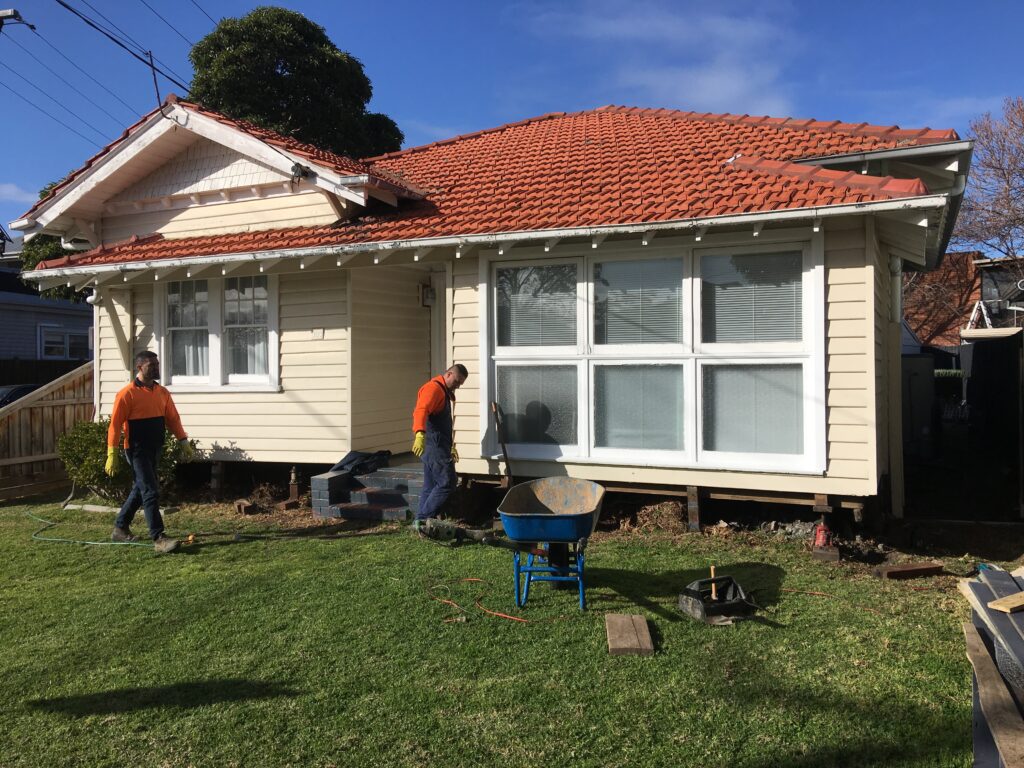
In simple terms, reblocking is structural foundation work carried out beneath homes supported by stumps or blocks. It typically involves replacing deteriorated or unstable supports and correcting the level of the structure where required.
The aim is not simply to make floors look straighter. The purpose is to restore appropriate support beneath the home and address the underlying structural issue causing movement.
What Is Reblocking?
Reblocking involves assessing the supports beneath a house, identifying which stumps or blocks have deteriorated or moved, safely supporting the structure and replacing the affected supports.
Where the house has moved out of level, sections may also be carefully adjusted during the process.
Melbourne homeowners often use the terms reblocking and restumping to describe closely related foundation work. You can read our detailed guide to
reblocking vs restumping
for more context.
If you’re already looking for a contractor rather than general information, visit our
Reblocking Melbourne service page
.
In practical terms: reblocking focuses on restoring reliable support beneath a stump-supported home where existing supports have deteriorated, shifted or can no longer adequately support the structure.
Why Do Melbourne Homes Need Reblocking?
Older homes can experience movement beneath the floor for several reasons.
Timber supports can deteriorate with age, moisture or termite activity. Ground conditions can also change over time, causing supports or footings to settle differently.
The Victorian Building and Plumbing Commission notes that foundation movement can be influenced by changing soil moisture, settlement, erosion and tree roots.
Read the Victorian foundation movement guidance
.
Those conditions do not automatically mean a property requires reblocking, but they demonstrate why the cause of structural movement should be assessed before repairs are recommended.
What Are the Signs a House May Need Reblocking?
Problems beneath the home often become noticeable inside the property before homeowners realise there is an issue with the supports.
- Uneven, sloping or dipping floors
- Floors that feel bouncy or unstable
- Doors and windows becoming difficult to close
- Recurring cracks in walls or ceilings
- Gaps developing around skirting boards or frames
- Visible deterioration beneath the property
- Sections of the house gradually moving out of level
No single symptom proves that reblocking is required.
For example, wall cracking and uneven floors can also be associated with other forms of foundation movement. Our guide to
cracks, uneven floors and foundation problems
explains those warning signs in more detail.
What Happens During Reblocking?
The exact process varies between properties, but a typical reblocking project follows several key stages.
Inspection
Assess the existing supports, subfloor, access and level of movement.
Support
Safely support affected sections of the structure before stump removal.
Remove
Remove deteriorated or unstable supports requiring replacement.
Replace
Install suitable new structural supports beneath the home.
Level & Check
Complete required adjustments and confirm final support conditions.
Is Reblocking the Same as Restumping?
In Melbourne, the two terms are often used interchangeably because both generally refer to replacing the supports beneath stump-supported homes.
The exact terminology used by a contractor is less important than the actual scope of work.
A project may involve replacing individual deteriorated stumps, replacing many supports across the home, correcting floor levels or dealing with other structural conditions discovered during inspection.
Learn more about our
Restumping Melbourne services
if stump replacement is the main issue affecting your property.
What Is the Difference Between Reblocking and Underpinning?
Reblocking
Reblocking generally relates to homes supported on stumps or blocks and focuses on replacing deteriorated supports and correcting levels where required.
Underpinning
Underpinning is used where existing footings or foundations require additional support or stabilisation.
The distinction matters because similar symptoms, such as cracks or uneven floors, can originate from different foundation systems.
Read our
Reblocking vs Underpinning guide
or visit our
Underpinning Melbourne service page
for more detail.
Does Reblocking Include House Levelling?
It can.
Where failing supports have caused sections of a house to move out of level, structural adjustment may form part of the reblocking work.
However, not every uneven home requires new stumps.
Where the existing supports remain serviceable, dedicated
house levelling
may be more appropriate.
Our guides to
uneven floors in Melbourne
and
House Levelling Cost Melbourne
explain this issue in more detail.
What Type of Stumps Are Used for Reblocking?
Replacement stump material depends on the property, structural requirements and project design.
Concrete and steel are both used in modern foundation work, while many older Melbourne homes were originally supported on timber.
If you are comparing replacement materials, read our
Concrete vs Steel Stumps guide
.
The Victorian Building and Plumbing Commission also recommends appropriate termite management and notes that termite-resistant structural materials can include concrete and steel.
See the Victorian termite guidance
.
How Much Does Reblocking Cost in Melbourne?
Reblocking costs vary because each house has a different number of supports, access conditions, level of movement and structural requirements.
Factors can include:
- Number of stumps or supports requiring replacement
- Condition of the existing foundation
- Subfloor access
- Property size
- Amount of levelling required
- Replacement support type
- Additional structural requirements identified during assessment
For current guidance, see our
Reblocking Cost Melbourne guide
.
How Long Does Reblocking Take?
The timeframe depends on the scale of work, number of supports, access beneath the house and the amount of structural adjustment required.
A smaller partial repair can involve substantially less work than a property requiring replacement across most of the subfloor.
You can read our
How Long Does Reblocking Take? guide
for a more detailed explanation.
Can You Reblock a House Yourself?
Reblocking is structural building work and should not be treated as a DIY levelling project.
Consumer Affairs Victoria states that only registered builders can reblock or restump a home, regardless of the value of the work.
Read Consumer Affairs Victoria’s building contract guidance
.
That is an important distinction because the work involves supporting the structure, replacing load-bearing elements and potentially adjusting the level of the home.
What Else Can Affect Foundation Movement?
The condition of the stumps is only one factor beneath a home.
The Victorian Building and Plumbing Commission advises homeowners that changing soil moisture, poor drainage, leaking services, trees and soil conditions can contribute to movement around foundations.
That is why a proper inspection should look beyond the visible cracks or uneven floor and consider what is actually occurring around and beneath the property.
Victorian Building and Plumbing Commission: Minimising foundation movement
When Should You Get a Reblocking Inspection?
It is worth arranging an inspection if floors are becoming progressively more uneven, doors and windows are moving out of alignment, visible supports are deteriorating or cracking repeatedly returns after cosmetic repairs.
The goal of an inspection is to establish whether the issue is actually reblocking-related or whether the property would be better addressed through restumping, house levelling, underpinning or another repair.
Think Your Melbourne Home May Need Reblocking?
First Choice Reblocking can inspect the existing supports, floor levels and visible signs of movement before recommending the appropriate foundation repair.
Learn more about our
Reblocking Melbourne services
or arrange an on-site assessment.