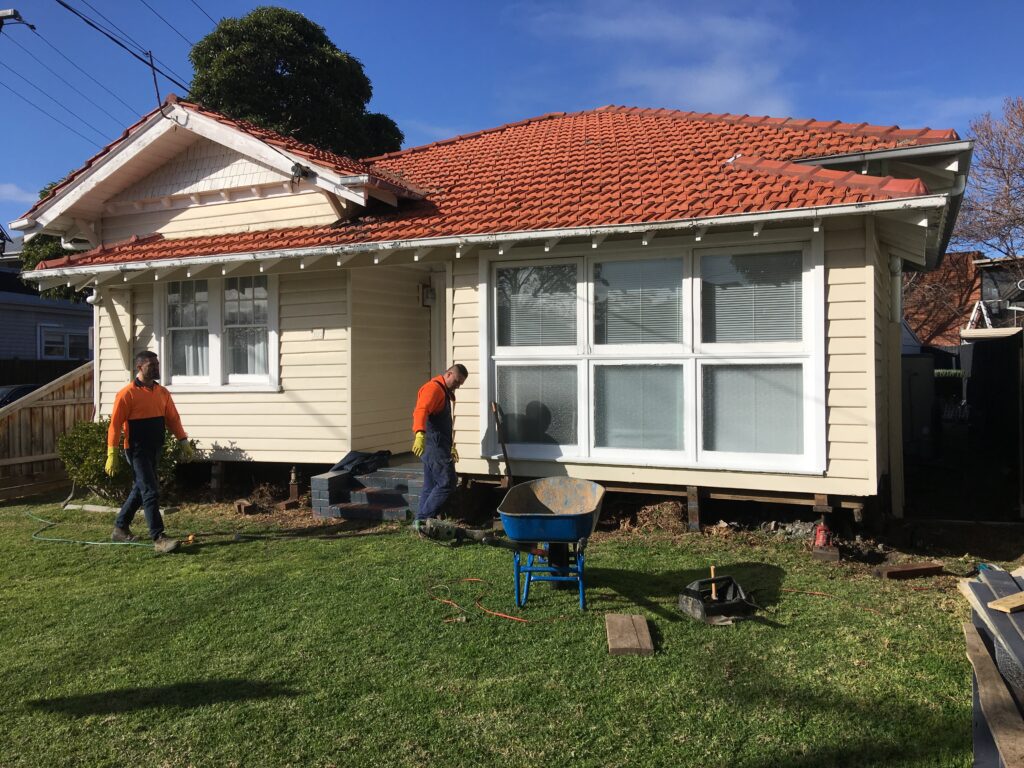

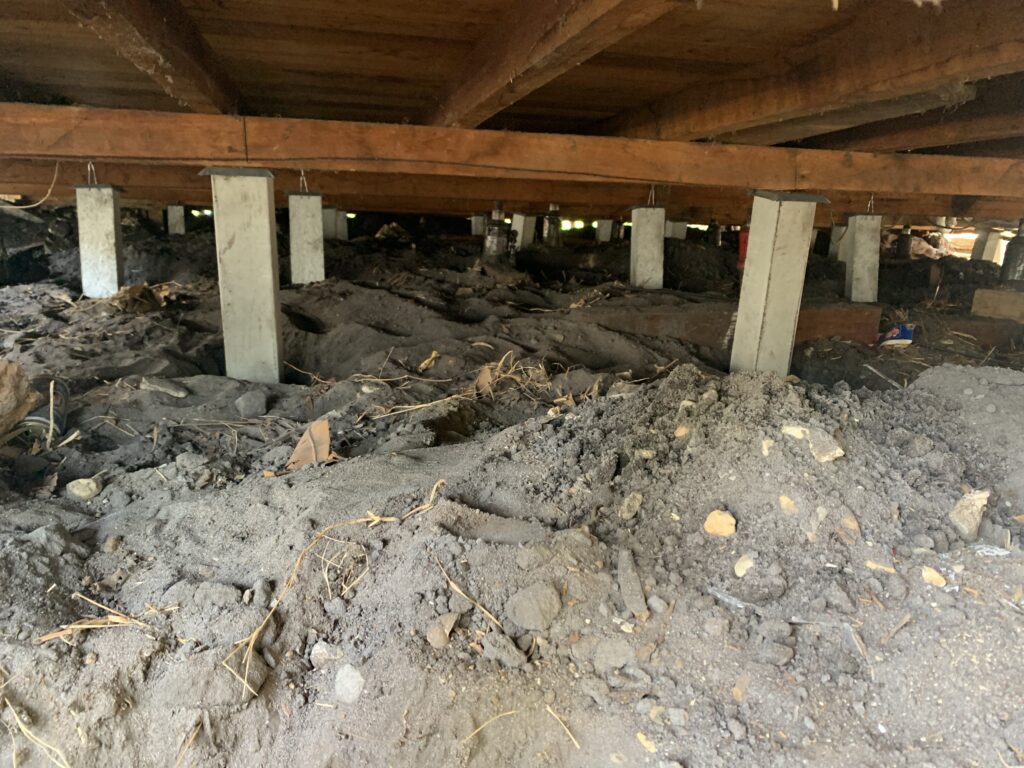
Reblocking a house in Melbourne starts from around $18,000 and typically runs between $18,000 and $40,000+, depending on the size of the home, the number of stumps and how far the structure has moved.
On a per-stump basis, reblocking costs roughly $300 to $500 per stump, which includes lifting and re-levelling the house as part of the work.
That is higher than straight restumping, which sits at $200 to $350 per stump, because reblocking corrects the structure’s position rather than just replacing what holds it up. If your home is still level and only the stumps have deteriorated, our restumping cost guide covers that pricing separately.
Reblocking cost at a glance
| Scope | What it covers | 2026 price |
|---|---|---|
| Partial reblocking | One affected section, 10 to 20 stumps | From $8,000 |
| Two-bedroom home | Full lift and re-level | $18,000 to $24,000 |
| Three-bedroom home | Full lift and re-level | $22,000 to $32,000 |
| Large or period home | Full lift, re-level, complex access | $32,000 to $40,000+ |
| Per stump | Including lift and levelling | $300 to $500 |
Prices are indicative for Melbourne metro in 2026 and assume standard access. A site inspection determines the final figure.
What drives reblocking costs up or down
Reblocking is not a fixed-price service. These are the variables that move a quote, and roughly how much each one matters.
1. Number of stumps
The largest single factor. A two-bedroom weatherboard typically needs 30 to 40 stumps. A three-bedroom home usually sits between 45 and 65. A large period home can need 80 to 120.
At $300 to $500 per stump, that difference alone accounts for most of the range between an $18,000 job and a $40,000 one.
2. Access under the house
Typical impact: adds 15 to 25%
Anything under 500mm of subfloor clearance means manual excavation and slower work. Every stump hole takes longer to dig, every stump takes longer to place, and spoil has to be removed by hand. Homes with a rear extension built low to the ground are the most common cause of access-related cost increases in Melbourne.
3. Extent of structural movement
Typical impact: adds 10 to 20%
A house that has settled evenly lifts cleanly. A house that has dropped 40mm at one corner needs staged jacking, monitoring between stages, and usually plaster and cornice repair afterwards. The more distorted the structure, the slower and more careful the lift has to be.
4. Soil conditions
Typical impact: adds 10 to 15%
Melbourne’s reactive clay belt runs through much of the inner north and east. Reactive soil expands in winter and contracts in summer, which is why so many homes in these suburbs move seasonally. Footings need to be deeper and better engineered to stop the movement from recurring, and that adds excavation and concrete cost.
5. Stump material
Timber stumps carry the lowest upfront cost and the shortest lifespan, and are rarely the right choice in a full reblock. Concrete is the standard for most Melbourne homes, offering strong durability at mid-range cost. Steel costs the most upfront and performs best on high-movement sites.
6. Condition of what is already there
Rotted stumps, previous poor-quality repairs, and stumps that have sunk into their footings all add excavation and disposal time. Homes that have been partially restumped before often cost more, not less, because the mismatched work has to be corrected first.
Reblocking vs restumping: what the extra money buys
Homeowners often ask for a restumping quote when the house actually needs reblocking, because restumping is cheaper. The price gap is real, and so is the difference in what gets fixed.
Restumping replaces damaged stumps at $200 to $350 per stump. The house stays where it is. This is the right choice when the stumps have deteriorated but the structure is still level.
Reblocking lifts the house, re-levels it, and installs new stumps at the corrected height, at $300 to $500 per stump. This is necessary once the structure has already moved.
The practical difference matters more than the price difference. If the house has dropped and you only restump, you have replaced the supports and locked in the movement. Doors still stick, floors still slope, and the cracks do not close. The saving is real on the invoice and imaginary in the result.
If you are unsure which one your home needs, our reblocking and underpinning comparison explains how to tell the difference, or you can read more about our reblocking Melbourne service.
What a cheap reblocking quote usually leaves out
A quote that comes in well under the others is not always better value. Before comparing totals, check whether these are included or excluded:
- Site preparation and excavation for each stump hole
- Removal and disposal of the old stumps
- Re-levelling, as opposed to like-for-like stump replacement
- Drainage correction, where poor drainage caused the movement in the first place
- Making good internally: plaster repairs, cornice, and door and window adjustment after the lift
- Engineering assessment or permit costs where required
- Warranty terms, and what the warranty actually covers
Ask for the scope in writing. Two quotes $6,000 apart are usually describing two different jobs, not two different prices for the same job.
How to compare reblocking quotes properly
Compare scope, not totals. Line up what each quote includes before comparing the bottom line. A cheaper number with half the inclusions is not a saving.
Confirm re-levelling is included. This is the most common exclusion and the most expensive thing to add once work has started.
Ask what caused the movement. A contractor who cannot explain why the house moved is treating the symptom. If the cause is drainage- or soil-related and goes unaddressed, the problem returns.
Check material and warranty. Ask what stumps are going in, their expected service life, and exactly what the warranty covers.
Confirm registration and insurance. Structural work in Victoria requires appropriate registration. Ask for the details and verify them.
How long does reblocking take?
Most standard Melbourne homes take 5 to 10 working days for the physical work, with the house typically supported on jacks for 2 to 3 days during the lift. Larger homes, restricted access, or staged jacking on badly distorted structures extend this.
You can usually remain living in the property during a reblock, though services may be briefly interrupted. Our guide on how long reblocking takes covers the process stage by stage.
Can you get an accurate reblocking price without an inspection?
Not a final one, but you can get close.
Stump count, subfloor access and the degree of movement drive most of the cost, and all three need to be seen properly to be priced. What a contractor can tell you before attending is which bracket you are in. Based on your home’s age, size, construction type and suburb, you should know whether you are looking at an $18,000 job or a $40,000 one before anyone comes out.
What online estimates cannot tell you is the cause of the movement, and that is what determines whether the repair holds.
Is reblocking worth it?
For a home that has visibly moved, reblocking resolves the cause rather than deferring it. Beyond the structural benefit, it removes a defect that shows up in building inspections and affects sale price, so the work often returns a meaningful share of its cost at resale. Our guide on whether reblocking increases property value looks at that in more detail.
The cost of leaving it is rarely static. Continued movement widens cracks, distorts window and door frames, and can eventually affect plumbing runs under the floor, all of which add to the eventual repair bill.
Get a fixed price for your home
Every Melbourne home moves differently. A free on-site inspection gives you a fixed-price quote with the full scope in writing, so you know exactly what is included before you commit.
Book a free inspection or call 0499 885 575
Servicing Melbourne metro. Licensed and insured.
Check our Service Area