
“`html
Restumping is one of the most effective ways to restore structural support in older Melbourne homes where timber stumps have deteriorated, shifted or can no longer adequately support the structure. One of the most common questions homeowners ask before arranging the work is how long the process will take.
For many standard restumping projects in Melbourne, the work can often be completed within several days. However, the exact timeframe depends on the size of the home, the number of stumps requiring replacement, access beneath the property, soil conditions and the amount of re-levelling required.
How Long Does Restumping Usually Take?
As a general guide, smaller homes or partial restumping projects may take approximately 2 to 5 days, while more extensive full-house restumping can take around 4 to 7 days or longer. These timeframes are indicative only, as structural conditions can vary significantly between properties.
A professional inspection before work begins is important because it allows the contractor to assess the condition of the existing stumps, access requirements and whether additional foundation work may be required. Homeowners researching the financial side of the project can also read our guide to restumping and reblocking costs in Melbourne.
What Happens During the Restumping Process?
Although every property is different, a typical restumping project involves several key stages.
1. Site Preparation and Inspection
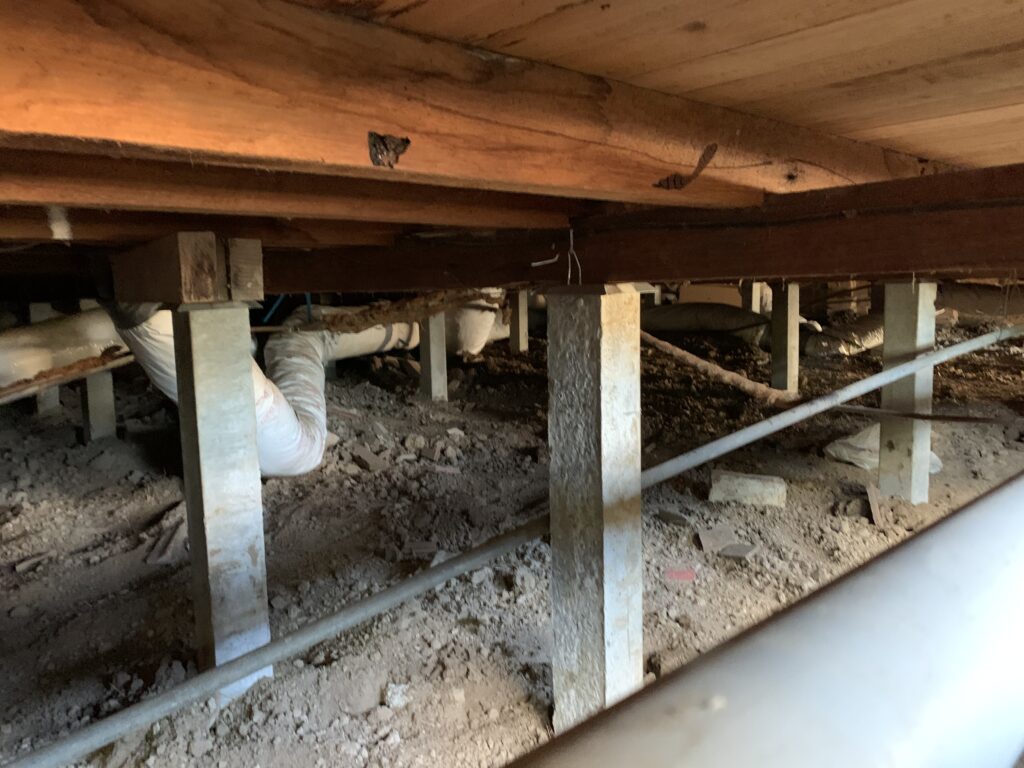
The area beneath the property is prepared so the existing stumps can be safely accessed. The team assesses the subfloor, existing supports and any structural movement before lifting begins.
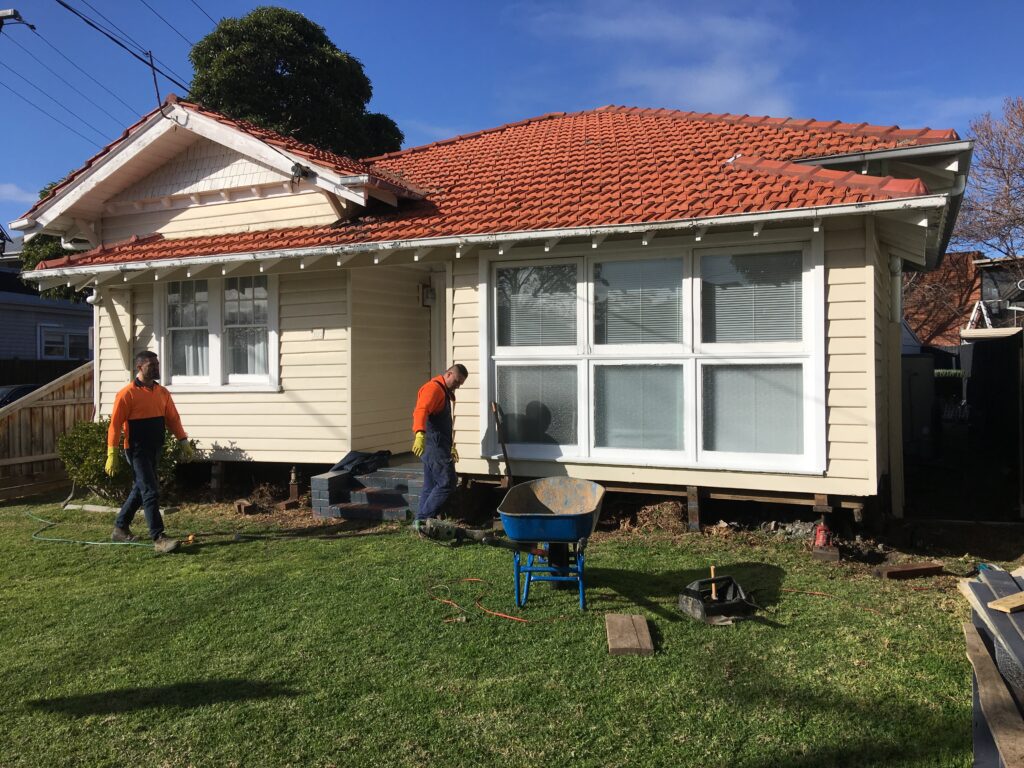
2. Supporting and Lifting the House
The structure is carefully supported using appropriate lifting equipment. Any lifting or levelling is carried out gradually to minimise unnecessary stress on the building.
3. Removing Deteriorated Stumps
Old, damaged or unstable stumps are removed. The time required can vary depending on their condition, location and accessibility.
4. Installing New Stumps
Replacement concrete, steel or suitable timber stumps are positioned and installed according to the requirements of the property.
5. Re-Levelling and Final Checks
Once the new supports are in place, the home is checked for level and structural stability before the project is completed.
What Can Affect the Restumping Timeline?
The duration of a restumping project is influenced by more than the number of stumps being replaced. Larger homes generally require more work, while limited crawl-space access can slow removal and installation. Reactive soil conditions, drainage problems and extensive foundation movement may also require additional preparation or structural correction.
Weather can also affect the schedule, particularly when heavy rain makes excavation or ground conditions difficult. For this reason, an accurate timeframe should always be based on an inspection of the individual property rather than a fixed number of days.
Can You Stay in the House During Restumping?
In many cases, homeowners can remain in the property while restumping work is carried out. However, there may be noise, vibration and temporary movement while sections of the structure are supported and adjusted.
Whether occupants should temporarily leave will depend on the scale of the work and the condition of the property. Your contractor should explain any access or safety requirements before the project begins.
Can Restumping Cause Cracks or Movement Inside the House?
Some minor cosmetic movement can occur when an older house is lifted and re-levelled. Existing plaster cracks may become more noticeable, and doors or windows may require adjustment once the structure has settled into its corrected position.
The purpose of professional restumping is to restore stable support beneath the home while minimising unnecessary disruption. If the property has more widespread structural movement, the appropriate solution may extend beyond basic stump replacement and could involve house reblocking or another foundation repair method.
Restumping vs Reblocking: Does One Take Longer?
Restumping and reblocking are closely related services, and the terms are often used differently depending on the property and scope of work. The timeframe for either service depends primarily on the number of supports involved, the amount of levelling required and the overall condition of the foundation.
Rather than assuming one method will always be faster, the correct repair should be chosen based on the construction and condition of the home. If you are unsure which service applies to your property, a professional inspection can determine whether restumping, reblocking or another foundation solution is appropriate.
How Can You Avoid Unnecessary Delays?
A thorough inspection before work begins is one of the best ways to establish a realistic project schedule. Site access, drainage issues, soil conditions and the condition of existing stumps should be identified early so they can be incorporated into the scope of work.
Working with an experienced contractor who understands Melbourne homes and local foundation conditions also reduces the likelihood of unexpected complications once the project begins.
How Long Will Your Restumping Project Take?
For many Melbourne homes, restumping can be completed within several days, but there is no universal timeframe. Property size, access, stump condition, soil conditions and the extent of structural movement all influence how long the work will take.
If your floors are uneven, your existing stumps are deteriorating or you are concerned about movement beneath your home, First Choice Reblocking can assess the property and explain the recommended scope, expected timeframe and likely costs. Book a free foundation inspection to get advice specific to your home.
“`